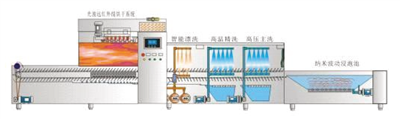
Hey there! As a supplier of Rack Type Dishwasher, I often get asked if it's okay to use our machines with hard water. It's a valid question, and I'm here to break it all down for you.
First off, let's talk about what hard water actually is. Hard water contains high levels of minerals like calcium and magnesium. These minerals are picked up as water travels through rocks and soil. You might notice hard water in your daily life when you see white, chalky deposits on your faucets or when your soap doesn't lather as well as it should.
So, can you use a rack type dishwasher with hard water? The short answer is yes, you can. But there are some things you need to be aware of.
The Impact of Hard Water on Your Rack Type Dishwasher
When you use hard water in your dishwasher, the minerals can build up over time. This buildup, known as limescale, can cause a few problems.
One of the main issues is with the dishwasher's heating element. The limescale can insulate the heating element, making it less efficient. This means your dishwasher has to work harder to heat the water, which can lead to higher energy bills. In some cases, the limescale can even cause the heating element to overheat and fail, which is a costly repair.
Another problem is with the spray arms. The nozzles on the spray arms can get clogged with limescale, reducing the water pressure and coverage. This can result in dishes not getting cleaned properly. You might end up with spots and streaks on your glasses and plates, and food particles might not be washed away completely.
The pumps in the dishwasher can also be affected. Limescale can cause the pump to work less efficiently, and in severe cases, it can lead to pump failure. This can disrupt the normal operation of the dishwasher and require professional repair.
How to Minimize the Effects of Hard Water
Now that we know the potential problems, let's talk about how to minimize the effects of hard water on your rack type dishwasher.
Use a Water Softener
One of the best ways to deal with hard water is to use a water softener. A water softener removes the minerals from the water before it enters the dishwasher. This can significantly reduce the amount of limescale buildup. There are different types of water softeners available, including salt-based and salt-free models. Salt-based water softeners are more effective at removing minerals, but they require regular maintenance and the addition of salt. Salt-free water softeners are easier to maintain, but they might not be as effective in very hard water areas.
Use a Dishwasher Cleaner
Regularly using a dishwasher cleaner can help prevent limescale buildup. Dishwasher cleaners are designed to dissolve limescale and other deposits in the dishwasher. You can use a cleaner once a month or as recommended by the manufacturer. Just run the cleaner through an empty dishwasher on a hot cycle to clean the interior, including the heating element, spray arms, and pumps.
Adjust the Detergent Usage
Hard water can reduce the effectiveness of dishwasher detergents. You might need to use a little more detergent than usual to get the same cleaning results. Look for detergents that are specifically formulated for hard water. These detergents often contain ingredients that can help break down the minerals and prevent limescale buildup.
Clean the Filter Regularly
The filter in your dishwasher traps food particles and other debris. If the filter gets clogged, it can affect the water flow and the cleaning performance. Make sure to clean the filter regularly to prevent limescale and other deposits from accumulating. You can usually remove the filter and rinse it under running water.
Our Rack Type Dishwashers and Hard Water
At our company, we understand the challenges of using hard water in dishwashers. That's why our Rack Type Dishwasher models are designed to be as resistant to limescale buildup as possible.
Our dishwashers are made with high-quality materials that are less prone to limescale adhesion. The heating elements are designed to be easy to clean, and the spray arms have large nozzles that are less likely to get clogged.
We also offer some advanced models, like the Dishwasher with A Capacity Of 220 Baskets and the Eco Cycle Dishwasher, which have additional features to deal with hard water. These models might have built-in water softening systems or advanced cleaning cycles that can adapt to different water conditions.
Conclusion
In conclusion, you can use a rack type dishwasher with hard water, but you need to take some precautions to minimize the effects of limescale buildup. By using a water softener, a dishwasher cleaner, adjusting the detergent usage, and cleaning the filter regularly, you can keep your dishwasher running smoothly and your dishes clean.
If you're in the market for a new rack type dishwasher, our products are a great choice. We offer high-quality, reliable dishwashers that are designed to handle hard water. Whether you need a large-capacity dishwasher for a commercial kitchen or an eco-friendly model for a smaller space, we have options to suit your needs.


If you have any questions or are interested in purchasing one of our rack type dishwashers, don't hesitate to reach out. We're here to help you make the right choice for your business or home.
References
- "Understanding Hard Water and Its Effects on Appliances." Home Maintenance Guide.
- "Dishwasher Maintenance Tips for Hard Water Areas." Appliance Expert Magazine.
- "How to Choose the Right Dishwasher Detergent for Hard Water." Cleaning Solutions Journal.