

Your Professional Conveyor Belts Supplier
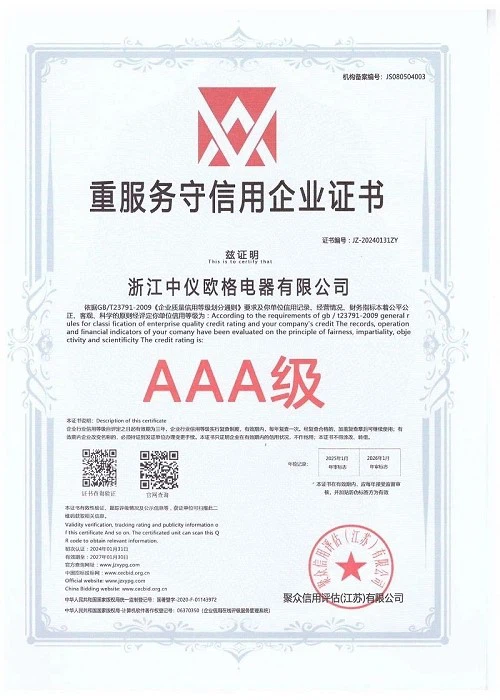
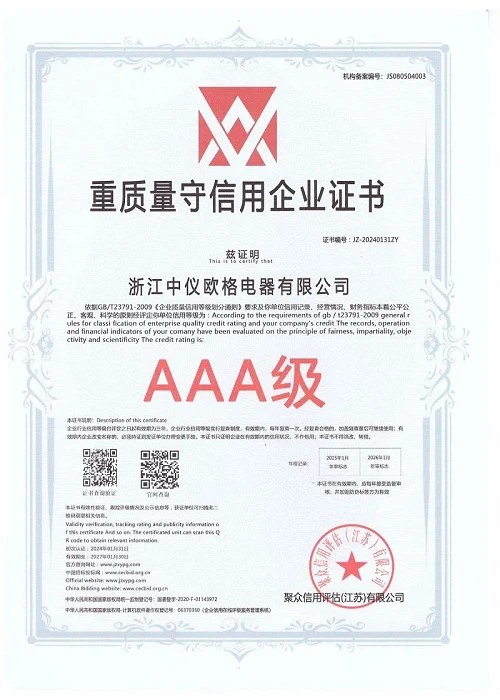
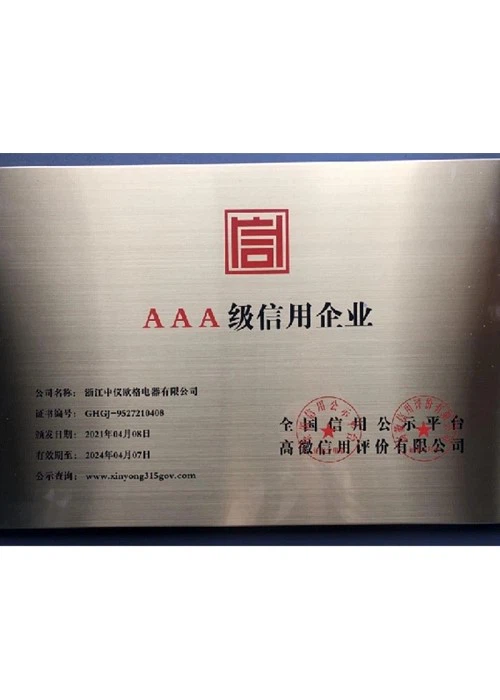
Zhejiang Zhongyi Ouge Electrical Appliance Co., Ltd. was established in January 2018 with a registered capital of 30 million yuan. The factory covers an area of 20,000 square meters. Its predecessor, "Zhejiang Zhongyi Science and Education Equipment Co., Ltd.", is a cooperative enterprise of the internationally renowned high-tech electronics enterprise Hong Kong Zhongyi International Group. Since 2003, the original company has specialized in producing multi-functional commercial dishwashers and intelligent meal vending systems, undertaking large-scale kitchen equipment projects, overall design and planning of central kitchens, and equipment supporting, etc.
-
![10m Rope Conveyor System]() 10m Rope Conveyor SystemThe rope conveyor belt is mainly used in hotels, schools, hospitals, large enterprise canteens and other places. The 10m rope conveyor system can be used with dishwashers, simple operation,...view more
10m Rope Conveyor SystemThe rope conveyor belt is mainly used in hotels, schools, hospitals, large enterprise canteens and other places. The 10m rope conveyor system can be used with dishwashers, simple operation,...view more -
![10m Chain Plate Conveyor]() 10m Chain Plate ConveyorThe chain conveyor is a perfect solution for the transfer of tableware between the restaurant and the dishwasher. According to the customer's site conditions and the configuration of the tableware...view more
10m Chain Plate ConveyorThe chain conveyor is a perfect solution for the transfer of tableware between the restaurant and the dishwasher. According to the customer's site conditions and the configuration of the tableware...view more -
![PVC Plain Conveyor Belt]() PVC Plain Conveyor BeltPVC plain conveyor belt is an industrial conveyor belt, widely used in light industry, food, logistics and other industries in low-speed conveying scenes. PVC plain conveyor belt with its cost...view more
PVC Plain Conveyor BeltPVC plain conveyor belt is an industrial conveyor belt, widely used in light industry, food, logistics and other industries in low-speed conveying scenes. PVC plain conveyor belt with its cost...view more


Why choose us
Leading Technological Innovation
The R&D center will continue to increase its investment in the R&D of core technologies for dishwashers and related electrical products to achieve more precise water level and temperature control of dishwashers, significantly improving cleaning efficiency and energy saving effects.
Deepening Industry-University-Research Collaboration
Further deepen cooperative relationships with universities and research institutions. Sign industry-university-research cooperation agreements with domestic universities to co-establish joint laboratories and talent training bases.
Our customization
In response to the special needs of customers, we will provide customized solutions to help customers solve specific problems and meet their personalized needs.
Our Services
We try and respond to all concerns within 24 hours and our teams are always at your disposal in case of any emergencies.
Conveyor Belts
A conveyor belt is a system that consists of a flexible belt looped over two or more pulleys that rotate, moving the belt and any material placed on it from one location to another. It's commonly used in various industries for transporting materials and goods across short or long distances within a site. The main functions of a conveyor belt include transportation, assembly processes, sorting, loading and unloading. Overall, conveyor belts are crucial for improving efficiency, speed, and accuracy in the handling and processing of materials and products.
|
Product size |
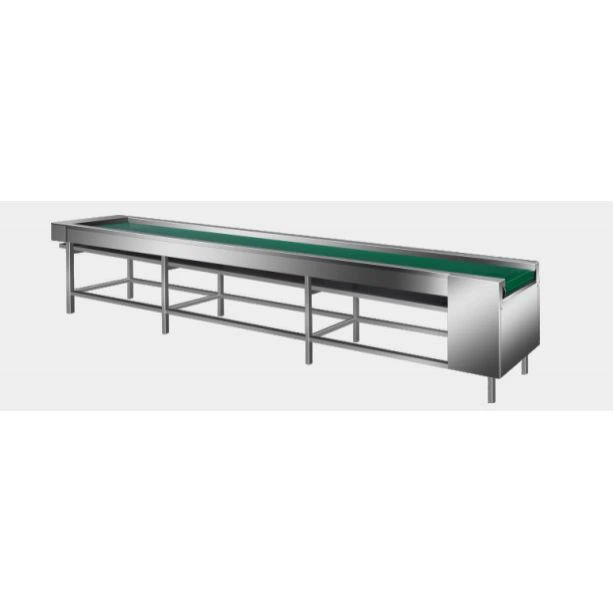
L*580*950MM |
|
Running speed |
1-15 m/min (variable frequency infinitely variable speed) |
|
Voltage |
380V/50HZ |
|
Aggregate capacity |
0.75KW |
Features of Conveyor Belts
01
Variable speed controls
Allows the conveyor to speed up or slow down based on the operational needs, optimizing workflow.

02
Reversible direction
Some conveyor belts can move in both directions, offering greater flexibility in how goods are moved within a facility.

03
Automated sorting systems
Integrated with sensors and actuators, these systems can identify items on the belt and direct them to specific locations.

04
Load sensors
Detect the presence of items on the belt, allowing the system to automatically adjust its operation to prevent overloading or jams.
Advantages of Conveyor Belts
Reduced Labor Costs
By automating the movement of goods, facilities can reduce manual handling tasks and reallocate labor elsewhere.
Improved Safety
Fewer repetitive tasks and heavy lifting requirements mean fewer worker injuries.
Greater Throughput
Conveyors can operate around the clock with minimal downtime, pushing more product through your facility in less time.
Consistent Quality Control
A well-designed conveyor can help maintain product integrity from start to finish.
Type of Conveyor Belts
The surface of a roller bed conveyor belt is comprised of a series of rollers carefully selected based on specific production requirements such as throughput speed, weight capacity, and the nature of the items being conveyed.
A flat belt conveyor is a versatile and widely used conveyor system across diverse industries. It employs a continuous belt—Often manufactured from natural rubber, polyurethane, PVC, or synthetic materials—driven by pulleys to transport a wide range of products, including small parcels, electronics, produce, and packages.
A modular belt conveyor is constructed from interlocking hard plastic segments, such as polypropylene or acetal, which enable rapid replacement, tailored repairs, and simplified cleaning—A critical feature for industries with stringent hygiene requirements such as food, beverage, and pharmaceuticals.
Cleated belt conveyors incorporate raised sections (cleats) or pockets that secure items during vertical, incline, or decline transportation. Cleated conveyor systems prevent material rollback and separation, making them vital for moving bulk materials, granular items, food products, agricultural commodities, and packages up steep slopes or through hoppers.
Electrostatic discharge (ESD) hazards—Arising from friction between conveyor belts and support beds, or movement of static-sensitive products—Pose significant risks to sensitive electronic devices and materials, as well as to personnel safety.
Production and manufacturing: In manufacturing facilities, conveyor belts are used to move raw materials, semi-finished and finished products between different production steps. This improves efficiency and reduces manual labour.
Recycling: At recycling facilities, conveyors are used to sort and move various materials such as paper, cardboard, glass and plastic for recycling purposes.
Agriculture: In the agricultural sector, conveyor belts are used to harvest and transport crops such as grain and vegetables, as well as to move animal feed.
Mining and heavy equipment: Conveyor belts play a crucial role in mining and mineral processing. They are used to move ore, coal and other raw materials from the mine to processing facilities.
Food processing
In the food processing industry, conveyors are used to move food products during different stages of processing, such as washing, cutting, packaging and labelling.
Logistics and distribution
Conveyor belts are often used in warehouses, distribution centres and airports to move goods from one location to another. They help streamline the order picking process and load and unload trucks and containers.
Airports
Conveyors are extensively used at airports for transporting baggage between check-in counters, baggage handling systems and baggage belts.
How conveyor belts work
Motor drive
The heart of a conveyor belt system is the motor drive, which provides the necessary power to turn the drive pulley. This motor can vary in size and power depending on the load it needs to move and the speed at which the belt must operate. Motors are typically electric and can be equipped with speed controllers to adjust the conveyor belt's velocity according to the operational requirements.
Drive pulley
Attached to the motor drive is the drive pulley. This pulley is responsible for imparting the motion to the belt. As the motor rotates the pulley, the belt moves in the direction of the motor's rotation. The drive pulley is often coated or made of materials that increase its grip on the belt to prevent slippage.
Conveyor belt material
The belt itself is a critical component, made from various materials such as rubber, PVC, neoprene, urethane, or nylon, based on the application's specific needs. The choice of material affects the belt's durability, friction, and capability to transport different types of goods. For instance, a belt designed to carry sharp objects might be made from tougher materials to resist cuts and wear.
Idler rollers
Positioned along the conveyor frame, idler rollers support the belt and the goods being transported. These rollers help maintain the belt's tension and ensure it remains aligned and flat. They also reduce the friction and wear on the belt, extending its lifespan. In some systems, idler rollers can be adjusted to change the belt's path or tension.
Conveyor frame
The frame serves as the backbone of the conveyor belt system, providing support for the rollers, motor, and belt. It is typically constructed from steel or aluminum for durability and can be designed to accommodate various conveyor lengths and widths.
Control system
Modern conveyor belts are often part of an automated system controlled by a central computer. This control system can dictate the belt's speed, direction, and even integrate with sensors to start or stop the belt automatically based on the workflow. For example, in a warehouse, the system might pause the belt to allow for the automated sorting or scanning of packages.
The frame: The system’s framework holds all of the moving parts together for safe and secure operation.
The belt: A long stretch of thick, durable material upon which materials are transported from one place to another.
The conveyor belt support: Rollers assist the belt to stay on course and swiftly maintain movement. Rollers keep objects in place and prevent the belt from sagging.
The driving unit: Motors may use either variable or constant speed-reduction gears to power the conveyor belt. An efficient driving unit must continually assist the belt with continuous running, smooth reversing and repeatedly adjusting direction.
The pulleys
The conveyor belt should loop over two or more strategically positioned pulleys. The pulley controls the belt’s movement and performs critical functions such as driving, redirecting, turning, tensioning and tracking the belt.
The clamping straps
Clamping straps are used on various machines to hold down fixtures and work components.
Add-on modules
Most additional parts are installed for further reinforcement. While rollers support the belt from within the system, stands and lateral guides support the outer framework.
How a conveyor belt is controlled
Control systems and automation
Most conveyor belts are part of an automated system controlled by a central computer or programmable logic controller (PLC). These control systems are programmed to manage the conveyor's operation, including starting and stopping the belt, controlling the speed, and directing the belt's movement. The automation allows for seamless integration with other systems within a facility, enabling synchronized operations that enhance overall efficiency.
Speed control
The speed of a conveyor belt can be adjusted to match the operational requirements of a task. Variable speed drives (VSDs) or variable frequency drives (VFDs) are commonly used to control the motor's speed, allowing the conveyor to operate at different speeds as needed. This is particularly useful in assembly lines or when handling materials that re
Direction control
Some conveyor belts are designed to move in both directions. This capability is controlled by reversing the motor's direction, allowing the conveyor to transport materials to and from different locations within a facility. Direction control enhances the flexibility and utility of the conveyor system.
Sensors and feedback loops
Conveyor systems often incorporate sensors and feedback mechanisms to monitor and control the belt's operation. These can include photoelectric sensors, proximity sensors, and weight sensors. They provide real-time data on the conveyor's status, such as the presence of items on the belt, the belt's alignment, and the load. This information is used to make automatic adjustments to the conveyor's operation, improving efficiency and preventing issues like overloads or jams.
Safety controls
Safety is a paramount concern in the control of conveyor belts. Emergency stop buttons, safety switches, and guards are integrated into the control system to ensure safe operation. These features allow for the immediate stopping of the conveyor in case of an emergency, protecting both the workers and the materials being transported.
Integration with Warehouse Management Systems (WMS)
In advanced logistics operations, conveyor belts are often integrated with Warehouse Management Systems (WMS) and other automation technologies. This integration allows for the coordinated movement of goods, optimizing the flow of materials through processes like sorting, packaging, and shipping. The WMS can dictate the operation of the conveyor belt based on real-time inventory needs, enhancing the precision and timing of material handling.
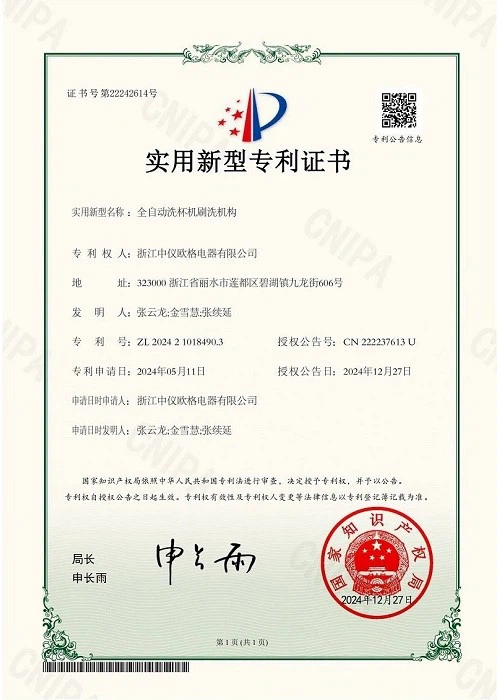
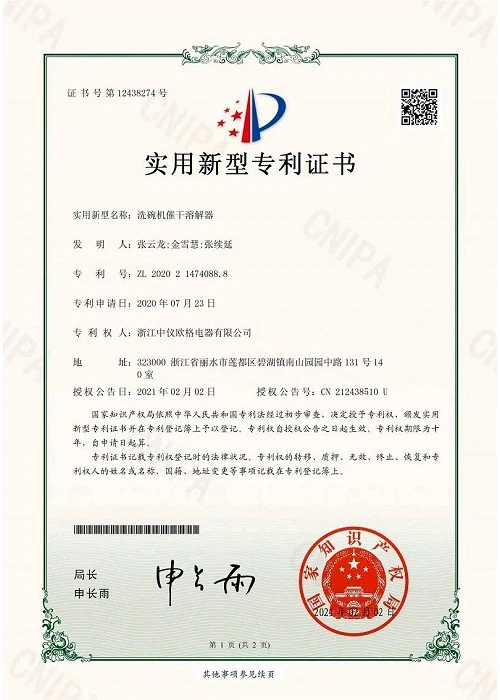
Our Certifications
FAQ
As one of the leading conveyor belts manufacturers in China, we warmly welcome you to buy intelligent conveyor belts made in China here and get pricelist from our factory. For price consultation, contact us.


