In the realm of industrial automation and material handling, conveyor belts play a pivotal role. They are the unsung heroes that keep production lines moving, ensuring seamless transfer of goods from one point to another. Among the various types of conveyor belts available in the market, PVC Plain Conveyor Belts and PU Conveyor Belts are two popular choices. As a supplier of PVC Plain Conveyor Belt, I often encounter questions from clients about the differences between these two types of belts. In this blog post, I will delve into the characteristics, advantages, and applications of both PVC Plain Conveyor Belts and PU Conveyor Belts to help you make an informed decision.
Composition and Material Properties
PVC Plain Conveyor Belt
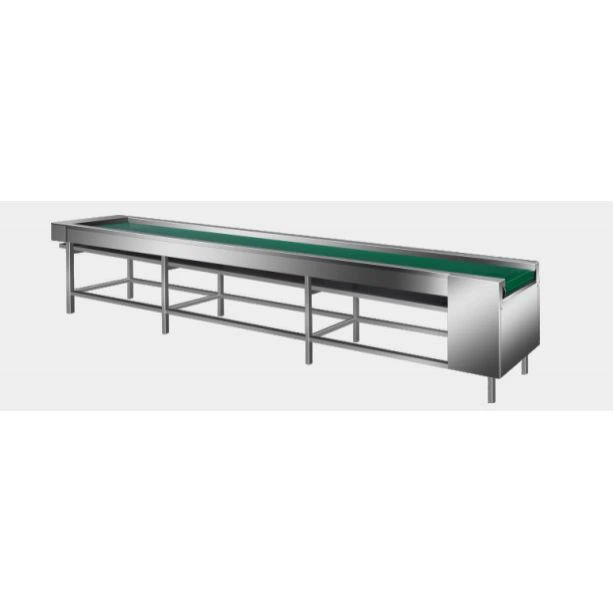
PVC, or polyvinyl chloride, is a synthetic plastic polymer that is widely used in the manufacturing of conveyor belts. A PVC Plain Conveyor Belt consists of a woven fabric carcass, typically made of polyester or nylon, which provides the belt with strength and dimensional stability. The carcass is then coated with a layer of PVC compound on both sides. The PVC coating gives the belt its smooth surface, making it suitable for conveying a wide range of products.
One of the key advantages of PVC is its chemical resistance. It can withstand exposure to various chemicals, oils, and solvents, making it ideal for use in industries such as food processing, packaging, and pharmaceuticals. PVC is also relatively inexpensive compared to other materials, which makes PVC Plain Conveyor Belts a cost - effective solution for many applications.
However, PVC has some limitations. It has a relatively low temperature resistance compared to some other materials. PVC belts can become brittle at low temperatures and may start to deform at high temperatures. The maximum operating temperature for a typical PVC Plain Conveyor Belt is usually around 60 - 80°C.
PU Conveyor Belt
PU, or polyurethane, is a thermoplastic elastomer that is known for its excellent mechanical properties. A PU Conveyor Belt is made by coating a fabric carcass, similar to the PVC belt, with a layer of polyurethane. Polyurethane offers high abrasion resistance, which means that PU Conveyor Belts can withstand heavy wear and tear, making them suitable for applications where the belt comes into contact with rough or sharp objects.
PU also has good flexibility, which allows the belt to bend easily around pulleys and rollers. This flexibility enables the use of PU Conveyor Belts in systems with small - diameter pulleys, which can be beneficial in space - constrained environments. Additionally, PU has a high tear strength, which means that it is less likely to tear or split under stress.
In terms of temperature resistance, PU generally has a better performance than PVC. It can operate at temperatures ranging from - 40°C to 80°C, and in some cases, even higher depending on the specific formulation of the polyurethane. However, PU is more expensive than PVC, which can be a limiting factor for some cost - sensitive applications.
Surface Properties
PVC Plain Conveyor Belt
The surface of a PVC Plain Conveyor Belt is smooth and flat. This smooth surface is ideal for conveying products that require a gentle handling, such as small parts, packaged goods, and food items. The smooth surface also makes it easy to clean, which is an important consideration in industries where hygiene is a priority, such as the food and beverage industry.
However, the smooth surface of a PVC Plain Conveyor Belt may not provide enough friction for some applications. For example, if you need to convey products on an inclined plane, the smooth surface may cause the products to slip. In such cases, additional measures such as adding cleats or rough - textured coatings may be required.
PU Conveyor Belt
PU Conveyor Belts can have a variety of surface textures. They can be manufactured with a smooth surface, similar to PVC belts, or with a textured surface to provide better grip. Textured PU Conveyor Belts are often used in applications where high friction is required, such as in the transportation of heavy or irregularly shaped objects on inclined or declined conveyors.
The ability to customize the surface texture of a PU Conveyor Belt gives it an advantage over PVC Plain Conveyor Belts in some applications. However, the textured surface may be more difficult to clean compared to a smooth PVC surface, especially in applications where strict hygiene standards need to be maintained.
Application Areas
PVC Plain Conveyor Belt
Due to its smooth surface, chemical resistance, and cost - effectiveness, PVC Plain Conveyor Belts are widely used in the following industries:
- Food Processing: In food processing plants, PVC Plain Conveyor Belts are used to transport food products such as fruits, vegetables, baked goods, and packaged foods. The smooth surface of the belt ensures that the food products are not damaged during transportation, and the chemical resistance of PVC makes it suitable for use in environments where cleaning agents and disinfectants are used.
- Packaging: PVC Plain Conveyor Belts are commonly used in packaging lines to move boxes, cartons, and other packaged products from one station to another. The cost - effectiveness of PVC belts makes them an attractive option for large - scale packaging operations.
- Electronics: In the electronics industry, PVC Plain Conveyor Belts are used to transport small electronic components and printed circuit boards. The smooth surface of the belt prevents damage to the delicate electronic parts.
PU Conveyor Belt
PU Conveyor Belts are preferred in applications where high abrasion resistance, flexibility, and high friction are required:
- Mining and Quarrying: In the mining and quarrying industry, PU Conveyor Belts are used to transport large amounts of rocks, minerals, and other heavy materials. The high abrasion resistance of PU ensures that the belts can withstand the harsh conditions and the heavy loads.
- Automotive: In automotive manufacturing plants, PU Conveyor Belts are used to transport car parts along the assembly line. The flexibility and high tear strength of PU make it suitable for handling large and heavy car components.
- Woodworking: In the woodworking industry, PU Conveyor Belts are used to transport wooden boards and other wood products. The textured surface of the PU belt provides good grip, preventing the wood from slipping during transportation.
Maintenance and Durability
PVC Plain Conveyor Belt
PVC Plain Conveyor Belts are relatively easy to maintain. The smooth surface can be easily cleaned with mild detergents and water. However, due to its relatively low abrasion resistance, PVC belts may need to be replaced more frequently in applications where there is a lot of wear and tear.
The lifespan of a PVC Plain Conveyor Belt depends on various factors such as the operating conditions, the load it carries, and the frequency of use. In general, a well - maintained PVC Plain Conveyor Belt can last for several years in normal operating conditions.
PU Conveyor Belt
PU Conveyor Belts require more careful maintenance compared to PVC belts. The textured surface of some PU belts may trap dirt and debris, which needs to be removed regularly to prevent premature wear. However, due to its high abrasion resistance and tear strength, a PU Conveyor Belt can have a longer lifespan than a PVC Plain Conveyor Belt in applications where there is a lot of wear and tear.
In some heavy - duty applications, a PU Conveyor Belt can last up to two or three times longer than a PVC Plain Conveyor Belt, which can offset the higher initial cost of the PU belt over time.
Conclusion
In summary, both PVC Plain Conveyor Belts and PU Conveyor Belts have their own unique characteristics, advantages, and limitations. PVC Plain Conveyor Belts are a cost - effective solution with good chemical resistance and a smooth surface, making them suitable for applications in industries such as food processing, packaging, and electronics. On the other hand, PU Conveyor Belts offer high abrasion resistance, flexibility, and better temperature resistance, which make them ideal for heavy - duty applications in industries such as mining, automotive, and woodworking.
If you are looking for a conveyor belt solution and are unsure which type is right for your application, I would be more than happy to assist you. As a supplier of PVC Plain Conveyor Belt, I have the expertise and experience to help you select the most suitable conveyor belt for your specific needs. Contact me today to discuss your requirements and start a procurement discussion.
References
- "Conveyor Belt Handbook" by Fenner Dunlop
- "Industrial Conveyor Belt Technology" by Habasit AG
- "Materials Science and Engineering: An Introduction" by William D. Callister Jr. and David G. Rethwisch