


As a seasoned supplier of PVC conveyor belts, I'm excited to delve into the intricate world of the materials used to craft these essential industrial components. PVC conveyor belts are ubiquitous in various industries, from food processing and packaging to manufacturing and logistics. Their versatility, durability, and cost - effectiveness make them a top choice for many businesses. In this blog, we'll explore the key materials that go into making a PVC conveyor belt, shedding light on their properties and contributions to the overall performance of the belt.
Polyvinyl Chloride (PVC) Resin
At the heart of a PVC conveyor belt is, of course, polyvinyl chloride resin. PVC is a synthetic plastic polymer known for its excellent chemical resistance, flexibility, and mechanical strength. It is derived from vinyl chloride monomers through a polymerization process.
The quality of the PVC resin significantly impacts the performance of the conveyor belt. High - grade PVC resins offer better resistance to abrasion, chemicals, and environmental factors. For instance, in food processing applications, the PVC resin used must meet strict food - grade standards to ensure the safety of the products being transported. These food - grade PVC resins are free from harmful substances such as heavy metals and plasticizers that could leach into the food.
PVC resin can be formulated in different ways to achieve specific properties. By adjusting the molecular weight and the degree of polymerization, manufacturers can control the hardness, flexibility, and tensile strength of the conveyor belt. For example, a conveyor belt used in a high - speed packaging line may require a more rigid PVC formulation to maintain its shape and stability during operation, while a belt used in a gentle handling application may need a more flexible PVC to conform to the contours of the products.
Plasticizers
Plasticizers are additives used to increase the flexibility and workability of PVC. They are incorporated into the PVC resin during the manufacturing process. Without plasticizers, PVC would be a hard and brittle material, unsuitable for use as a conveyor belt.
There are various types of plasticizers available, each with its own set of properties. Phthalate - based plasticizers were once widely used due to their effectiveness and low cost. However, concerns about their potential health and environmental impacts have led to a shift towards more eco - friendly alternatives. Non - phthalate plasticizers, such as adipates and trimellitates, are now commonly used in the production of PVC conveyor belts.
The choice of plasticizer depends on the specific requirements of the conveyor belt application. For example, in applications where the belt will be exposed to high temperatures, a plasticizer with good heat resistance is required. In food - contact applications, plasticizers must be approved for use in contact with food to ensure compliance with regulatory standards.
Reinforcement Materials
To enhance the strength and dimensional stability of PVC conveyor belts, reinforcement materials are often incorporated. These materials can be made of various substances, including polyester, nylon, and aramid fibers.
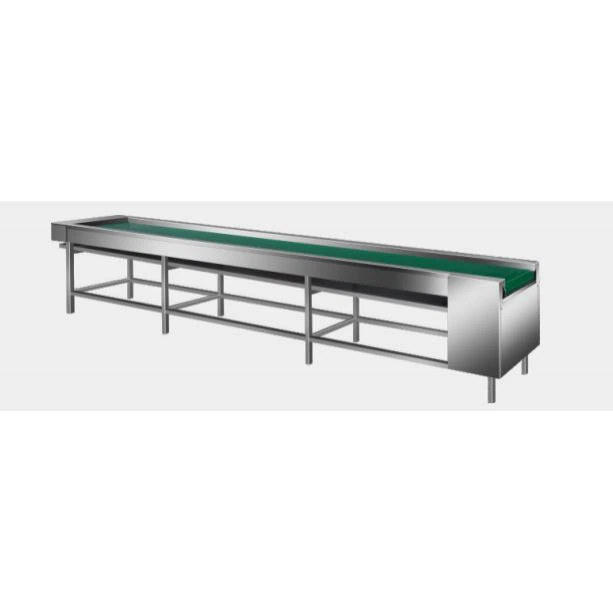
Polyester is a popular choice for reinforcement due to its high tensile strength, low stretch, and good chemical resistance. Polyester - reinforced PVC conveyor belts are commonly used in general - purpose applications, such as light - to medium - duty material handling. The polyester fibers are woven into a fabric structure, which is then embedded in the PVC matrix during the manufacturing process.
Nylon is another material used for reinforcement. It offers excellent abrasion resistance and high impact strength. Nylon - reinforced PVC conveyor belts are suitable for applications where the belt is subjected to heavy loads and rough handling. For example, in mining and quarrying operations, nylon - reinforced belts can withstand the harsh conditions and abrasive materials.
Aramid fibers, such as Kevlar, are the strongest of the reinforcement materials. They have extremely high tensile strength and are resistant to heat and chemicals. Aramid - reinforced PVC conveyor belts are used in high - performance applications, such as high - speed conveyor systems and applications where the belt needs to withstand extreme conditions.
Surface Coatings
The surface of a PVC conveyor belt can be coated with various materials to improve its performance in specific applications. These coatings can enhance properties such as friction, anti - static behavior, and resistance to adhesion.
For applications where good grip is required, such as in inclined conveyor systems, a high - friction surface coating can be applied. This coating increases the coefficient of friction between the belt and the products being transported, preventing slippage and ensuring smooth operation.
Anti - static coatings are used in applications where static electricity can cause problems, such as in the electronics industry. These coatings dissipate static charges, reducing the risk of damage to sensitive electronic components and preventing dust and debris from adhering to the belt.
In some applications, such as in the packaging of sticky products, an anti - adhesion coating is applied to the belt surface. This coating prevents the products from sticking to the belt, reducing downtime for cleaning and maintenance.
Other Additives
In addition to plasticizers and reinforcement materials, other additives may be used in the production of PVC conveyor belts. These additives can improve the belt's resistance to factors such as UV radiation, ozone, and fire.
UV stabilizers are added to protect the PVC from degradation caused by exposure to sunlight. This is particularly important for conveyor belts used in outdoor applications or in areas with high levels of UV radiation.
Ozone stabilizers are used to prevent the degradation of PVC due to exposure to ozone, which is present in the atmosphere and can cause cracking and deterioration of the belt over time.
Flame retardants are added to make the PVC conveyor belt fire - resistant. In applications where fire safety is a concern, such as in public buildings and industrial facilities, flame - retardant PVC conveyor belts are required to meet safety regulations.
Conclusion
In conclusion, the materials used to make a PVC conveyor belt are carefully selected and combined to meet the specific requirements of different applications. From the base PVC resin to the various additives and reinforcement materials, each component plays a crucial role in determining the performance, durability, and safety of the belt.
As a PVC conveyor belt supplier, we understand the importance of using high - quality materials and advanced manufacturing processes to produce conveyor belts that meet the highest standards. Our PVC Plain Conveyor Belt is a testament to our commitment to quality and innovation.
If you are in the market for PVC conveyor belts, whether for a small - scale operation or a large - scale industrial facility, we invite you to reach out to us. Our team of experts can help you select the right conveyor belt for your specific needs and provide you with all the information you need to make an informed decision. Contact us today to start a discussion about your conveyor belt requirements and explore how we can meet your procurement needs.
References
- "Handbook of Plasticizer Technology" by G. Wypych
- "Conveyor Belt Engineering" by Conveyor Equipment Manufacturers Association
- Industry reports on PVC conveyor belt materials and manufacturing processes.


