


Hey there! As a supplier of PVC conveyor belts, I often get asked about the maximum inclination angle for these belts. It's a crucial question, especially for those looking to optimize their conveyor systems. So, let's dive right into it.
First off, what exactly is the inclination angle? Well, it's the angle at which a conveyor belt is set relative to the horizontal plane. When you're using a conveyor belt to move materials, the inclination angle can significantly affect how well the belt functions. If the angle is too steep, the materials might slide back down instead of moving forward. On the other hand, if it's too shallow, you might not be making the most of your available space.
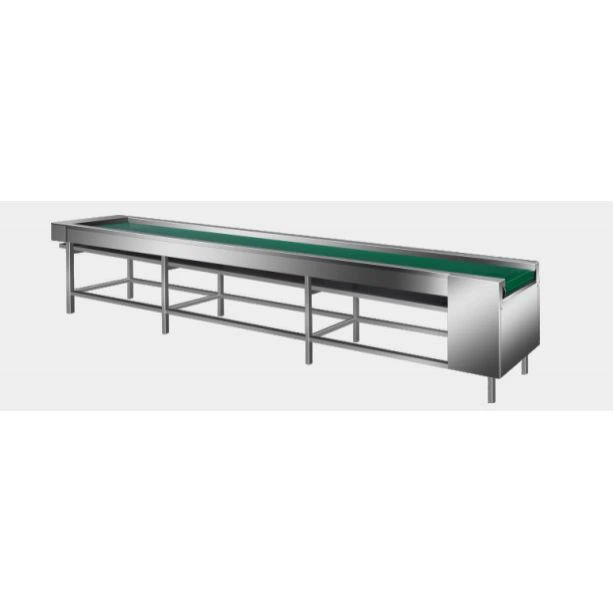
So, what's the maximum inclination angle for a PVC conveyor belt? The answer isn't as straightforward as you might think. It depends on several factors, including the type of PVC belt, the material being conveyed, and the surface conditions.
Let's start with the type of PVC belt. There are different kinds of PVC conveyor belts, each designed for specific applications. For example, the PVC Plain Conveyor Belt is a common type. It has a smooth surface, which is great for moving certain types of materials. However, because of its smoothness, it has a lower maximum inclination angle compared to belts with a textured or patterned surface.
A plain PVC conveyor belt usually has a maximum inclination angle of around 18 to 20 degrees. This is because the smooth surface doesn't provide much grip for the materials. If you try to set the belt at a steeper angle, the materials are likely to slip and fall off.
Now, if you're dealing with a PVC belt that has a textured surface, things change. Textured belts are designed to provide more friction between the belt and the materials. This extra friction allows the belt to operate at a steeper angle. Depending on the texture and the type of material being conveyed, a textured PVC conveyor belt can have a maximum inclination angle of up to 30 degrees or even more in some cases.
The material being conveyed also plays a huge role in determining the maximum inclination angle. Different materials have different properties, such as weight, shape, and surface friction. For example, if you're conveying small, round objects like marbles, they're more likely to roll and slide on the belt. In this case, you'll need to keep the inclination angle relatively low, probably around 15 to 18 degrees, even if you're using a textured belt.
On the other hand, if you're conveying large, flat objects with a high coefficient of friction, like wooden boards, you can set the belt at a steeper angle. These types of objects are less likely to slide, so you might be able to get away with an inclination angle of 25 to 30 degrees.
Surface conditions are another important factor. If the belt is dirty or wet, the friction between the belt and the materials will be reduced. This means you'll need to lower the inclination angle to prevent the materials from slipping. Similarly, if the environment is dusty, the dust can act as a lubricant, reducing the friction and making it more difficult to convey materials at a steep angle.
So, how do you determine the right inclination angle for your specific application? The best way is to conduct some tests. Start by setting the belt at a relatively low angle and gradually increase it while observing how the materials behave. Make sure to note down the maximum angle at which the materials can be conveyed smoothly without slipping or falling off.
It's also a good idea to consult with a conveyor belt expert. As a PVC conveyor belt supplier, I've worked with many customers to find the optimal inclination angle for their conveyor systems. We can take into account all the factors I mentioned earlier and provide you with personalized advice.
In addition to the factors I've discussed, there are some other things you can do to increase the maximum inclination angle of your PVC conveyor belt. One option is to use sidewalls or cleats on the belt. Sidewalls prevent the materials from falling off the sides of the belt, while cleats provide additional support and grip for the materials. By using sidewalls and cleats, you can often increase the maximum inclination angle by several degrees.
Another thing to consider is the speed of the conveyor belt. A slower belt speed can sometimes allow for a steeper inclination angle. This is because the materials have more time to settle and grip the belt surface. However, you'll need to balance the speed with the throughput requirements of your system.
If you're in the market for a PVC conveyor belt and need help determining the maximum inclination angle for your application, don't hesitate to reach out. We have a wide range of PVC conveyor belts, including the PVC Plain Conveyor Belt, and our team of experts can assist you in finding the right solution. Whether you're a small business or a large industrial operation, we're here to help you optimize your conveyor system.
In conclusion, the maximum inclination angle for a PVC conveyor belt depends on several factors, including the type of belt, the material being conveyed, and the surface conditions. While a plain PVC conveyor belt typically has a maximum inclination angle of around 18 to 20 degrees, a textured belt can handle steeper angles, up to 30 degrees or more. By conducting tests, consulting with experts, and using features like sidewalls and cleats, you can find the optimal inclination angle for your specific application.
If you're interested in learning more about our PVC conveyor belts or need help with your conveyor system, feel free to contact us. We're always happy to have a chat and discuss how we can meet your needs.
References
- Conveyor Belt Handbook, various industry publications
- Personal experience and case studies from working with PVC conveyor belts


