


The surface texture of a PVC conveyor belt plays a crucial role in its performance across various industries. As a leading PVC conveyor belt supplier, we understand the significance of different surface textures and their impact on the functionality of the belts. In this blog, we will delve into the details of the surface texture of PVC conveyor belts, exploring its types, characteristics, and applications.
Understanding PVC Conveyor Belts
PVC (Polyvinyl Chloride) conveyor belts are widely used in industries such as food processing, packaging, electronics, and logistics due to their excellent properties. They are known for their durability, flexibility, chemical resistance, and relatively low cost. The surface texture of a PVC conveyor belt is one of the key factors that determine its suitability for specific applications.
Types of Surface Textures
Smooth Surface
A smooth - textured PVC conveyor belt is one of the most common types. It has a flat and even surface, which offers several advantages. Firstly, it provides a gentle handling of products. In the food industry, for example, a smooth surface is ideal for conveying delicate items like pastries or fresh produce without causing damage. The smoothness also allows for easy cleaning, which is crucial in food - grade applications to maintain hygiene standards.
Secondly, smooth - surfaced PVC conveyor belts have low friction, which is beneficial when high - speed conveying is required. In the electronics industry, where components need to be moved quickly and precisely along the production line, a smooth belt reduces the risk of scratching or misaligning the parts.
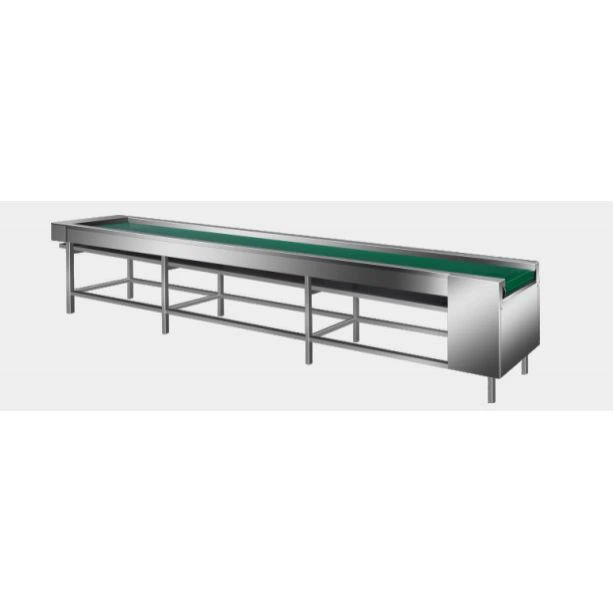
You can find our PVC Plain Conveyor Belt with a smooth surface, which is designed to meet the needs of various industries.
Rough Surface
Rough - textured PVC conveyor belts have a more uneven surface with raised patterns or granules. This type of texture is mainly used when there is a need for increased friction. In industries such as mining or construction, where heavy and bulky materials like stones or ores are being transported, a rough - surfaced belt can prevent the materials from slipping off during the conveying process.
The rough texture also provides better grip on inclined conveyor systems. When the belt is operating at an angle, the increased friction helps to keep the products in place and ensures a stable and efficient conveying operation.
Patterned Surface
Patterned PVC conveyor belts come in a variety of designs, such as chevron, herringbone, or diamond patterns. Each pattern is engineered to serve a specific purpose.
Chevron patterns are commonly used on inclined belts. The angled ridges of the chevron pattern act as barriers to prevent the backward sliding of products on the incline. This is especially useful in applications where products need to be transported uphill, such as in the agricultural industry for moving grains or in the recycling industry for conveying waste materials.
Herringbone patterns offer a combination of forward and lateral stability. They are suitable for applications where products need to be centered on the belt or where there is a need for a certain degree of side - to - side movement control. For example, in the packaging industry, herringbone - patterned belts can help to align products accurately for labeling or sealing operations.
Diamond patterns are often used in applications where a balance between grip and smooth product flow is required. They provide a good amount of friction while still allowing products to move relatively smoothly on the belt. This makes them suitable for industries like automotive manufacturing, where small parts need to be conveyed with precision.
Characteristics of Different Surface Textures
Wear Resistance
The wear resistance of a PVC conveyor belt's surface texture is an important consideration. Smooth - surfaced belts generally have good wear resistance as they are less likely to come into contact with abrasive materials in a way that causes excessive wear. However, in high - friction applications, the smooth surface may wear out more quickly due to the constant rubbing against the products.
Rough and patterned surfaces, on the other hand, are designed to withstand more abrasive conditions. The raised patterns or granules on these belts act as a buffer, protecting the base material of the belt from direct contact with the abrasive substances. This makes them more suitable for long - term use in harsh environments.
Chemical Resistance
PVC itself has good chemical resistance, and the surface texture does not significantly affect this property. However, in some cases, the texture can influence the ease of cleaning chemicals off the belt. A smooth surface is easier to clean, and chemicals are less likely to get trapped in the crevices. In contrast, rough and patterned surfaces may require more thorough cleaning to ensure that no chemical residues remain, especially in applications where strict chemical - free conditions are required, such as in the pharmaceutical industry.
Static Dissipation
In some industries, such as electronics manufacturing, static electricity can be a major problem as it can damage sensitive components. Smooth - surfaced PVC conveyor belts can be treated to have anti - static properties. The smooth surface allows for better control of static build - up, as there are fewer areas where static charges can accumulate.
Rough and patterned surfaces may require additional measures to dissipate static electricity. Special anti - static coatings or additives can be applied to these belts to ensure that static charges are safely discharged during the conveying process.
Applications Based on Surface Texture
Food Industry
In the food industry, smooth - surfaced PVC conveyor belts are the most commonly used. They are easy to clean and sanitize, which is essential for maintaining food safety. These belts are used for conveying raw and processed food products, such as fruits, vegetables, meat, and bakery items.
Patterned belts, such as chevron - patterned ones, can also be used in food processing plants where products need to be transported on inclined conveyors. For example, in a fruit - sorting facility, a chevron - patterned belt can help to move the fruits uphill without them rolling back.
Packaging Industry
The packaging industry uses a variety of surface textures depending on the type of products being packaged. Smooth belts are used for conveying lightweight and delicate packaging materials, such as cardboard boxes or plastic bags. Patterned belts, like herringbone - patterned ones, are used to align products accurately for filling, sealing, and labeling operations.
Manufacturing Industry
In the manufacturing industry, different surface textures are used based on the nature of the products being manufactured. Smooth belts are used for conveying small and precision parts in electronics and automotive manufacturing. Rough - surfaced belts are used in heavy - duty manufacturing processes, such as in the metalworking industry, where large and heavy metal parts need to be transported.
Choosing the Right Surface Texture
When choosing a PVC conveyor belt, it is important to consider the specific requirements of your application. Factors such as the type of products being conveyed, the conveying speed, the incline of the conveyor, and the environmental conditions should all be taken into account.
If you need a gentle handling of products and easy cleaning, a smooth - surfaced belt is a good choice. For applications where increased friction is required, such as on inclined conveyors or for heavy - duty materials, a rough or patterned belt may be more suitable.
As a PVC conveyor belt supplier, we have a team of experts who can help you select the most appropriate surface texture for your needs. We can also provide customized solutions based on your specific requirements.
Conclusion
The surface texture of a PVC conveyor belt is a critical factor that affects its performance and suitability for different applications. Whether it is a smooth surface for gentle product handling, a rough surface for increased friction, or a patterned surface for specific conveying requirements, each texture has its own unique advantages.
If you are in the market for a PVC conveyor belt and need guidance on choosing the right surface texture, or if you have any other questions about our products, please feel free to contact us. We are committed to providing high - quality conveyor belts and excellent customer service to meet your industrial needs.
References
- "Conveyor Belt Technology Handbook" by John A. Crolla
- "Industrial Conveyor Belt Applications" by Robert E. Williams
- Various industry reports on PVC conveyor belt usage and performance.


